Commercial interiors
Retail, hospitality, office, and public-facing spaces that need a durable floor with an intentional architectural finish.
 Start a project
 Polished concrete · Norfolk + Coastal Virginia
Polished concrete is not a single look. Hâpax helps define aggregate exposure, sheen, edge work, repairs, color, and maintenance around the slab and the way the room will actually be used.

The useful starting point
Project fit
Polishing works best when the existing concrete, desired appearance, and performance expectations can be aligned before the first grinding step.
Retail, hospitality, office, and public-facing spaces that need a durable floor with an intentional architectural finish.
Projects where placement, protection, joints, and finish expectations can be coordinated early with the builder and design team.
Ground-level interiors where the natural history and variation of the slab are welcome parts of the finished room.
Decisions that matter
Clear terminology prevents a vague request for ‘polished concrete’ from becoming an avoidable surprise.
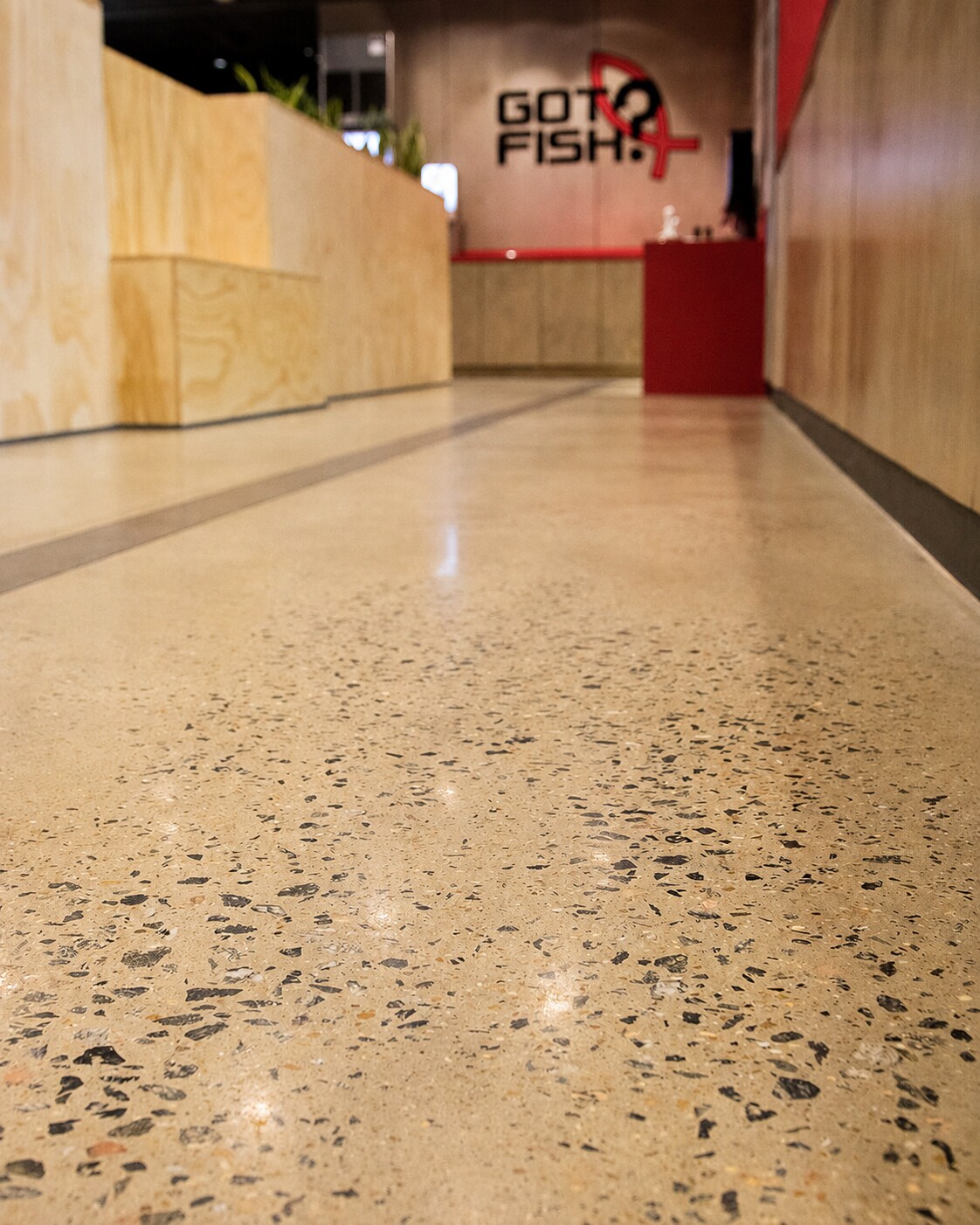
Cream, fine, and medium exposure describe how deeply the slab is cut and how much stone becomes visible.
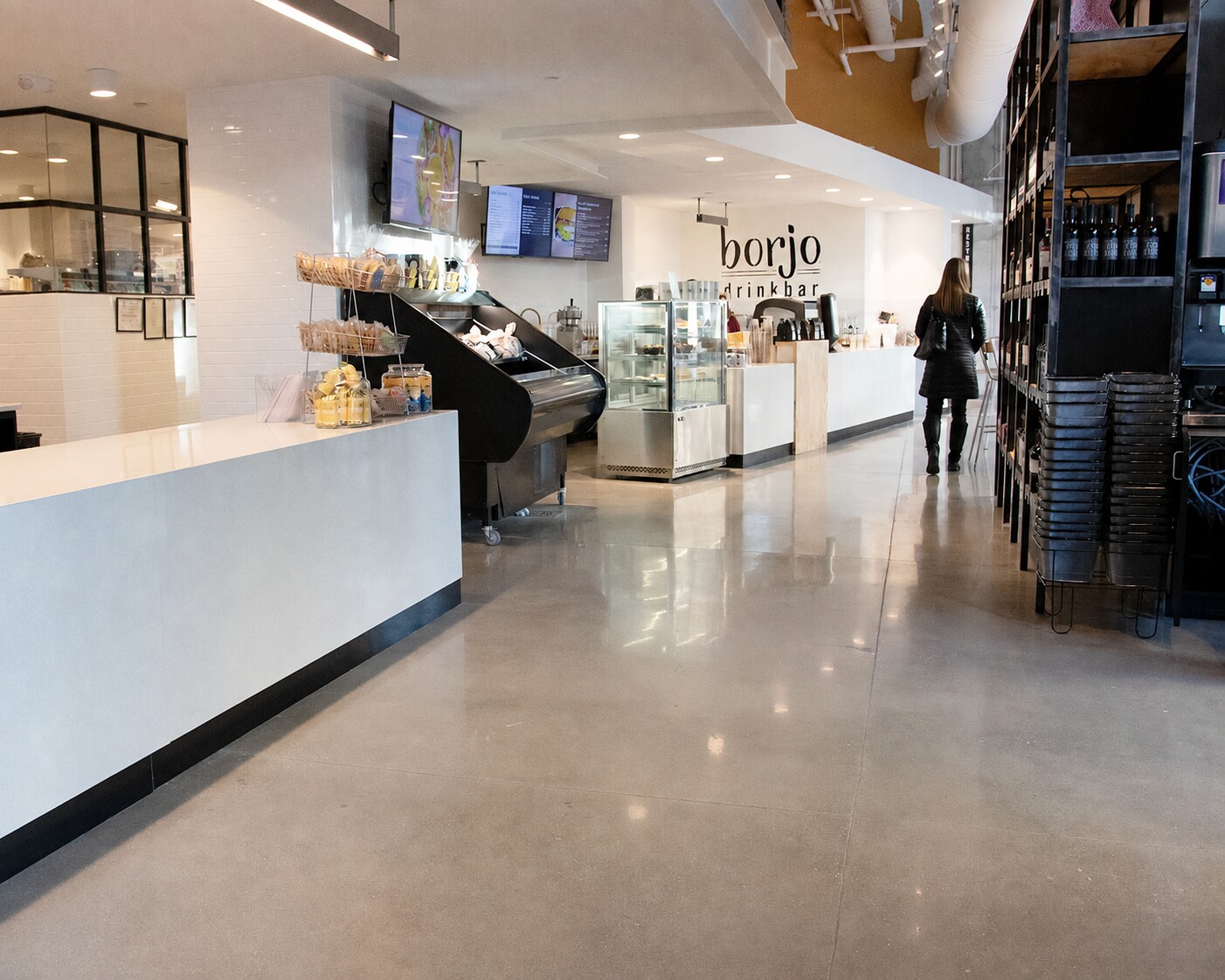
Matte through high sheen describes light reflection. It does not determine the amount of aggregate exposure.
Edges, corners, joints, repairs, and grout work determine whether the finish reads as simply complete or fully resolved.
Previous construction, curing, cracking, contamination, and aggregate placement all influence what the finished floor can become.
Client perspective
Published feedback connected to polished concrete work and the way Hâpax guides the project.
Read client reviews“…the best in the industry!”
“…worked with our staffing schedules…”
“Zack listens to the client and bends over backwards to address their concerns.”
How Hâpax approaches it
Hâpax reviews use, condition, access, edges, joints, repairs, and the result you are hoping to create.
Exposure, sheen, refinement, color, protection, schedule, and cost implications are discussed together.
Grinding, repairs, grout work, densification, polishing, and protection follow the approved sequence.
The completed floor is handed over with realistic cleaning, maintenance, and long-term appearance guidance.
Useful questions
A reference helps communicate direction, but every slab has its own aggregate, placement, repairs, joints, and history. Hâpax uses the reference to define useful choices without promising an identical result.
Slip behavior depends on sheen, contamination, cleaning, footwear, and whether the surface is wet. The use of the space should be discussed before the finish is specified.
Selected repairs and joint filling can make a floor feel more resolved, but existing movement and slab history cannot be erased. Hâpax defines which conditions will remain visible before work begins.
Routine dust removal, appropriate neutral cleaning, and prompt attention to spills protect the appearance. Hâpax provides care guidance for the selected finish and use.
For Hâpax’s standard polished-concrete densifier and penetrating stain protector, new concrete must cure at least 28 days. Moisture, finishing quality and jobsite conditions may require more time. Hâpax reviews the slab before confirming an installation date.
Planning your investment
See Hâpax starting points, typical ranges, and the project conditions that can affect the final price.
View concrete flooring pricingBegin with what you know